
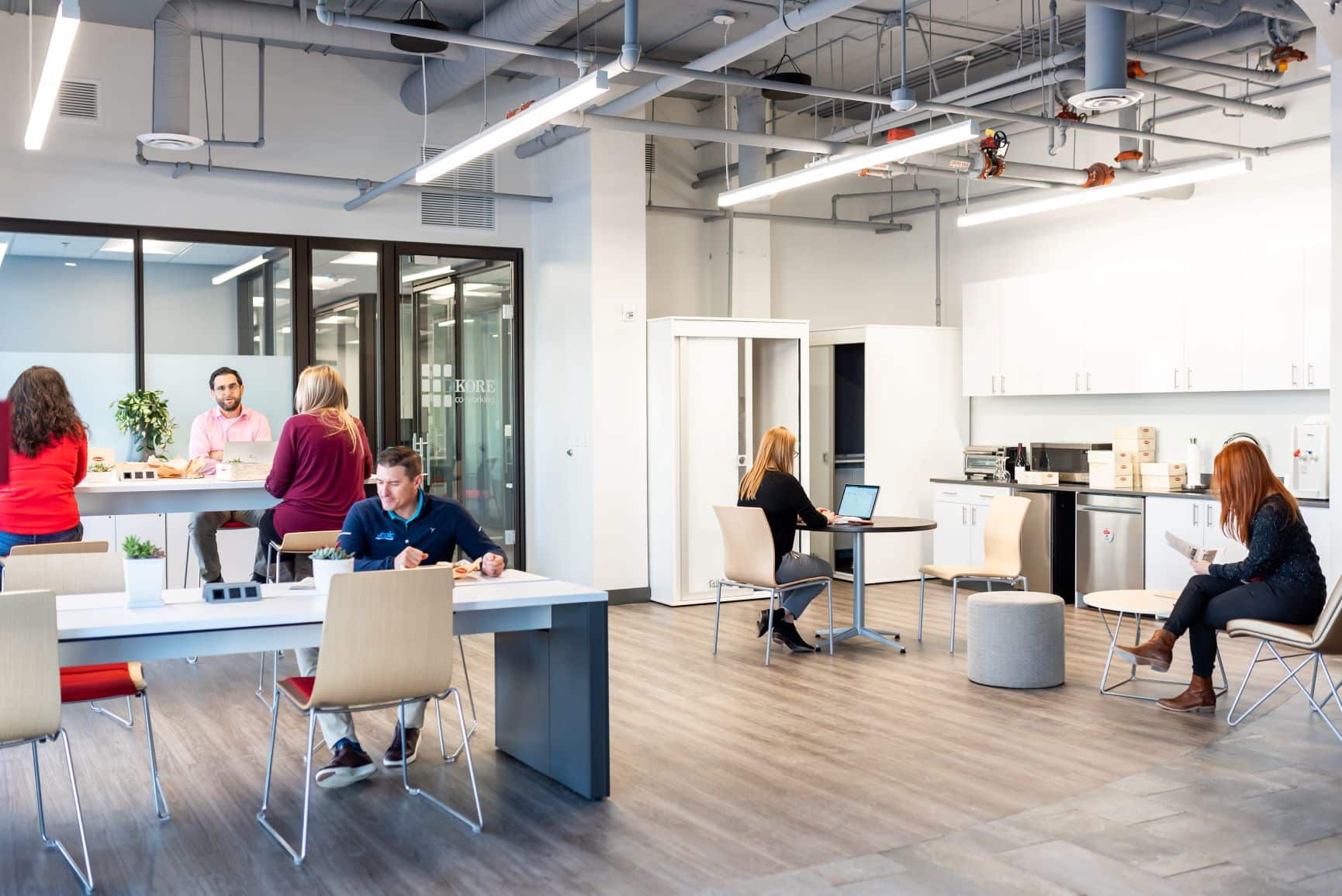
When businesses evaluate office space, the conversation often begins with rental rates, square footage, and location. While those factors remain important, many organizations are paying closer attention to another critical consideration: employee experience.
The workplace has changed significantly in recent years. In Gensler’s Global Workplace Survey 2026, 16,459 full-time office workers across 16 countries reported spending an average of 55% of their workweek in the office, compared with 18% at home. The findings reinforce a practical reality: the office is not disappearing, but neither is hybrid work. Businesses therefore need to think carefully about what makes an office worth the commute.
For Denver businesses considering a relocation, expansion, or lease renewal, understanding which office amenities employees want can help inform better real estate decisions.
The right office environment doesn’t just support your business, it supports the people who make your business successful.
Why Amenities Matter More Than Ever
The office is no longer viewed simply as a place where employees complete individual tasks. Today, many organizations see the office as a destination for collaboration, training, culture-building, and relationship development.
When employees have the option to work remotely, they naturally compare the office experience against the convenience of working from home. Businesses that create a positive workplace experience often find it easier to encourage office attendance and maintain employee engagement.
As companies evaluate office space, employee preferences are becoming an increasingly important part of the decision-making process. Beyond the office itself, the surrounding amenities can have a meaningful impact on recruitment efforts, employee retention, workplace satisfaction, productivity, collaboration, and even overall company culture. Choosing a location that supports employees’ daily needs and enhances their work experience can provide a competitive advantage when attracting and retaining top talent.
Premises Advantage: Office Location Evaluation Checklist
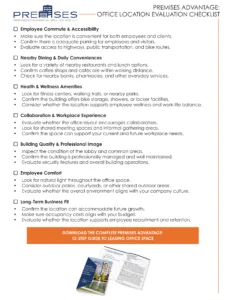
Compare office locations with confidence. Use this free checklist to evaluate employee accessibility, nearby amenities, building quality, and other key factors before making your next leasing decision.
Convenient Access and Commute Options
For many employees, commuting remains one of the most important aspects of the workday.
An office may offer attractive interior finishes and modern amenities, but if employees struggle with parking, traffic, or accessibility, those benefits can quickly be overshadowed.
When evaluating office locations, businesses should consider:
- Highway access
- Public transportation options
- Light rail proximity
- Bike-friendly infrastructure
- Parking availability
- Walkability
Convenient access can reduce commuting stress while making the office more attractive to both current and prospective employees.
Nearby Dining and Coffee Options
Employees appreciate having convenient options throughout the workday, and nearby restaurants, coffee shops, and cafés provide far more than just a place to grab a meal or a cup of coffee. These spaces often become natural settings for networking, informal meetings, client conversations, and social interaction among coworkers, helping to create a more engaging and connected workplace culture.
A mix of employee-friendly amenities such as coffee shops, casual and fast-casual restaurants, food halls, and grab-and-go lunch options can make an office location significantly more appealing. By choosing a location with these nearby conveniences, employers can enhance the overall employee experience and create a more vibrant workplace environment without the added expense of providing extensive onsite food and beverage services.
Fitness and Wellness Amenities
Workplace wellness is no longer a secondary consideration. In the Gensler survey, 46% selected physical and mental wellness amenities among their top five priorities for a future workplace, making it the most frequently selected option.
That result should not be read as a mandate for a fitness center alone. A gym may help a building check the wellness box, but it delivers limited value if employees do not use it. Denver businesses should evaluate a broader mix of features, including walking trails, bike storage, showers and locker rooms, nearby parks, natural light, outdoor areas, and quiet spaces for focused or restorative work. In the survey, 43% prioritized outdoor areas and nature views, while 40% selected quiet, reflective spaces.
Modern Collaborative Spaces
The role of the office continues to evolve. Hybrid employees may come in to connect with colleagues, brainstorm ideas, hold meetings, and strengthen relationships, but the workplace must also support individual focus. The Gensler survey found that workers spend about 39% of a typical week working alone and 27% collaborating in person. That mix argues for a balanced environment rather than one dominated by a single work mode.
Workplaces that support interaction can still provide greater value than layouts focused solely on private offices. Breakout spaces, informal meeting areas, shared lounges, flexible conference rooms, and technology-enabled collaboration spaces can encourage communication, while quiet rooms and dependable individual work areas help employees concentrate when they need to.
Hybrid Work Still Requires Personal Space
The same research found that 83% of respondents had assigned seating. Among the 17% with unassigned seating, 59% said they would prefer an assigned seat. Even in a hybrid environment, many employees still value a predictable place to work and the ability to personalize their workspace.
For companies considering hoteling or shared desks, this does not mean every employee needs a permanently assigned workstation or that office footprints cannot change. It does mean space plans should be based on attendance patterns, headcount, job functions, and direct employee input rather than an automatic assumption that hybrid work requires fewer desks.
Outdoor Spaces and Natural Light
Outdoor areas, nature views, and natural light remain highly valued workplace features.
Gensler’s research supports that preference: 43% of respondents selected outdoor areas and nature views among their top five priorities for the future workplace. Access to outdoor areas and daylight can contribute to a more enjoyable experience while helping employees feel connected to their environment.
Popular amenities include:
- Outdoor patios
- Courtyards
- Rooftop decks
- Walking paths
- Large windows
- Open common areas
These features can help create a workplace employees genuinely enjoy spending time in.
Building Quality and Workplace Experience
Employees notice far more than just their office suite. The overall building experience often shapes first impressions and influences day-to-day satisfaction for both employees and visitors. From the moment someone enters the property, the quality and professionalism of the building can reinforce a company’s image and create a more welcoming work environment.
Features such as updated lobbies, modern common areas, professional property management, reliable security systems, and clean facilities all contribute to a positive workplace experience. A well-maintained building not only supports employee morale but also leaves a favorable impression on clients, customers, and prospective hires who visit the office.
Balancing Amenities with Business Objectives
Amenities matter, but they should be evaluated within the context of broader business goals.
The ideal office location balances:
- Employee preferences
- Budget requirements
- Growth plans
- Operational efficiency
- Accessibility
- Company culture
Not every organization requires premium amenities, but every organization benefits from understanding what matters most to its workforce.
A thoughtful office strategy considers both business needs and employee expectations.

To learn more about these steps and ensure you’re fully prepared, download our complete Premises Advantage: Your 12-Step Leasing Roadmap below.
The Right Amenities Can Support Long-Term Business Success
Current workplace research points to both the importance of the office and the establishment of hybrid work, while employees seek workplaces that support focus, collaboration, wellness, and personal control.
For Denver businesses, the strongest leasing decisions will not be based on amenities alone. They will balance rental rates, square footage, attendance patterns, employee preferences, and the features that influence day-to-day satisfaction and performance.
That may mean convenient access and dining, wellness and outdoor features, collaborative spaces, reliable areas for focused work, and enough assigned or predictable workspace to support the way employees actually work.
Office locations that align these elements with business objectives may provide a meaningful advantage in recruitment, retention, engagement, and long-term success.
The best office space is not simply the one that fits your budget; it is the one that aligns with both your business objectives and your employees’ needs.
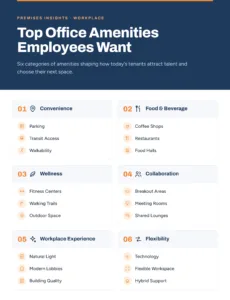
Planning an office move?
Searching for Office Space That Fits Your Team?
The right location, amenities, and building environment can make a meaningful difference for your business and your employees. Contact our team today to discuss your office space needs.


